The whole rubric, in public
Three strokes, twelve scored categories, 31 measured checkpoints with the target ranges they are graded against — plus 17 estimated that are deliberately kept out of your score and 8 a phone camera will never see. Publishing what the camera misses, next to what it measures, is the point.
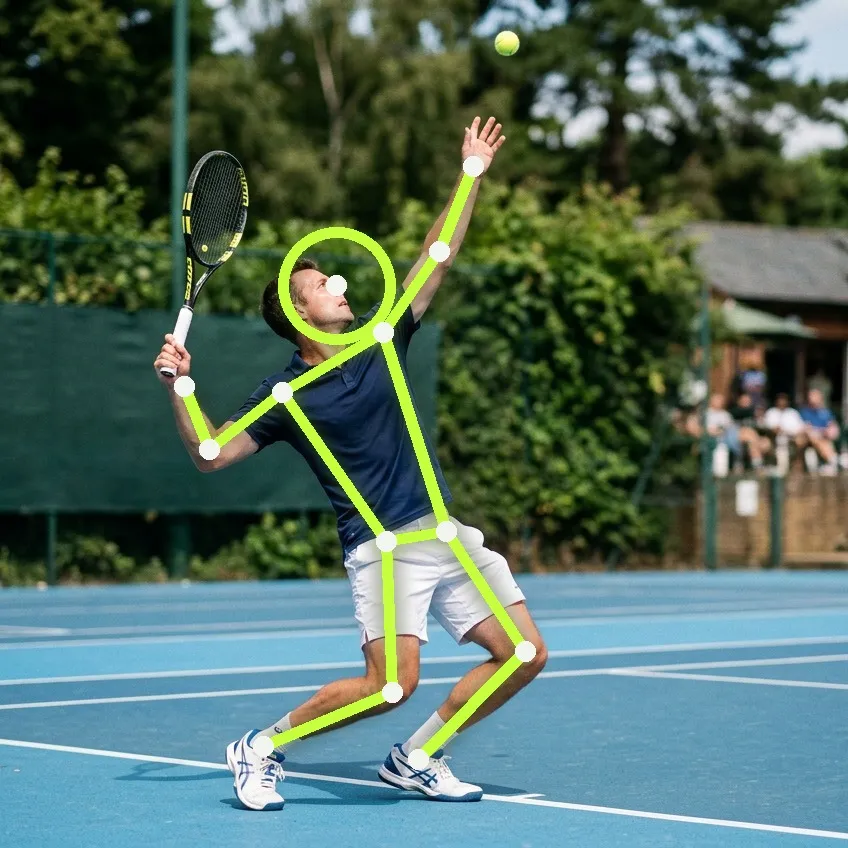
Serve
11 measured · 5 est. · 5 checklist
Toss, trophy, racquet drop, contact and landing — five phases, graded against published elite ranges.
- Grip & Setup · not scored
- Toss & Loading
- Trophy Position
- Racquet Drop & Chain
- Contact & Finish
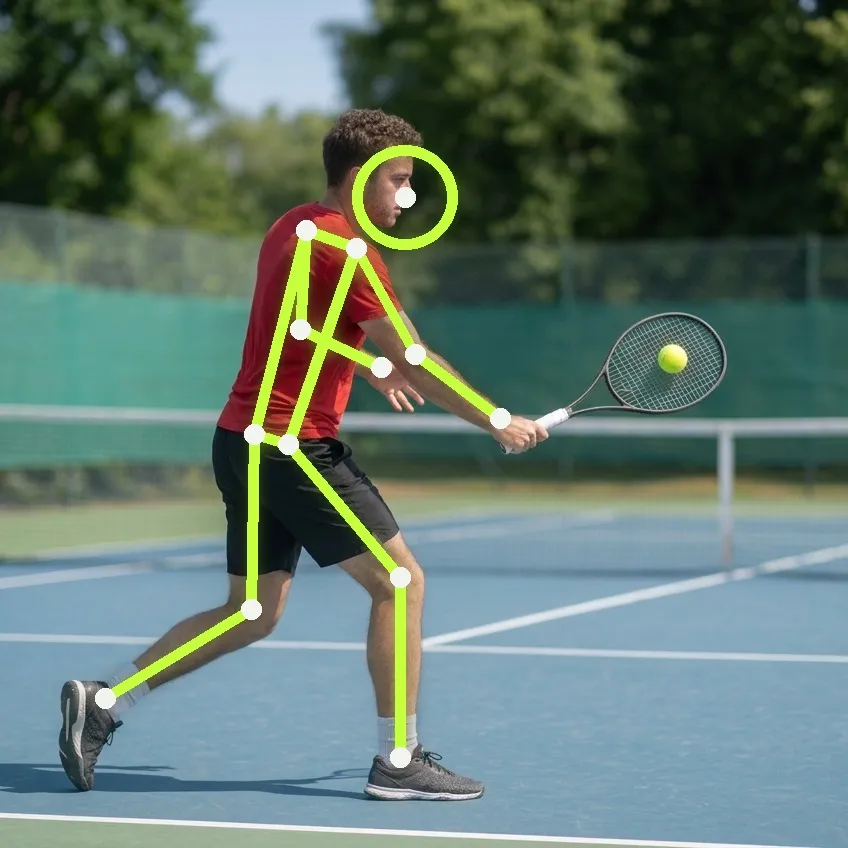
Forehand
10 measured · 6 est. · 2 checklist
Unit turn, leg load, racquet lag, the kinetic-chain order, contact height and spacing, and where the finish ends up.
- Setup & Turn
- Load & Lag
- Contact
- Finish
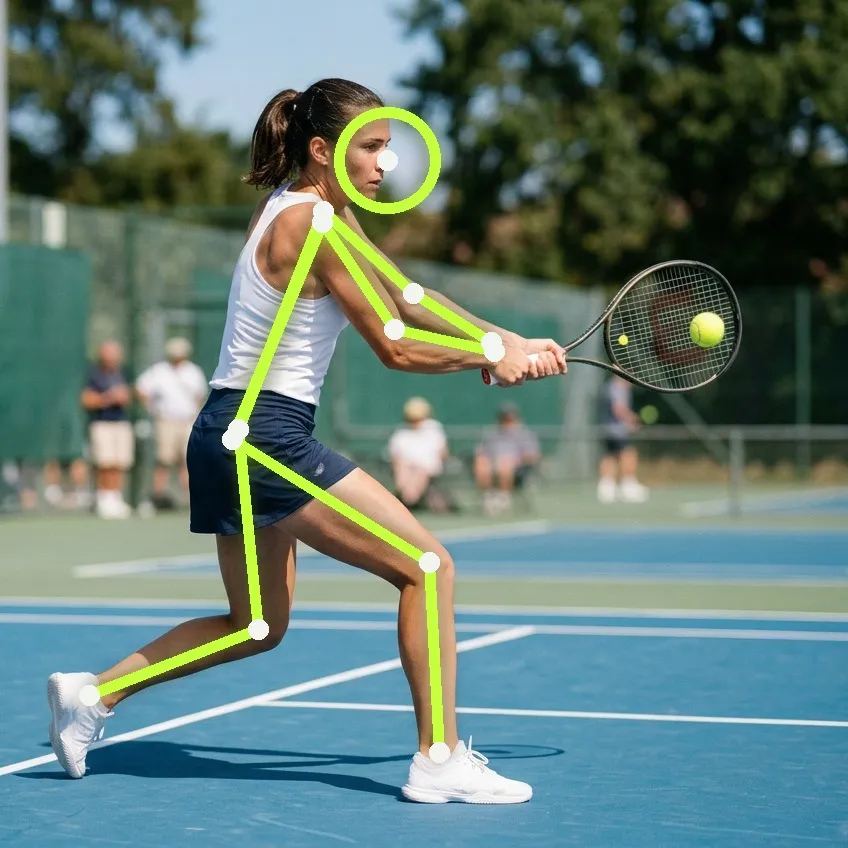
Backhand
10 measured · 6 est. · 1 checklist
One-handed and two-handed, graded on their own terms — racquet high point, rear-leg load, lag, contact, and whether you stayed sideways.
- Setup & Turn
- Load & Lag
- Contact
- Finish
The rule behind all three
If it happens in the camera plane, it gets a number.
Angles that open and close toward the lens — knee, elbow, shoulder-line tilt, contact height — are measured. Anything that rotates around the vertical axis reaches the camera as foreshortening, not displacement, so it is estimated and left out of your score. Grip and forearm pronation are invisible at any angle, so they stay on a checklist you confirm once.
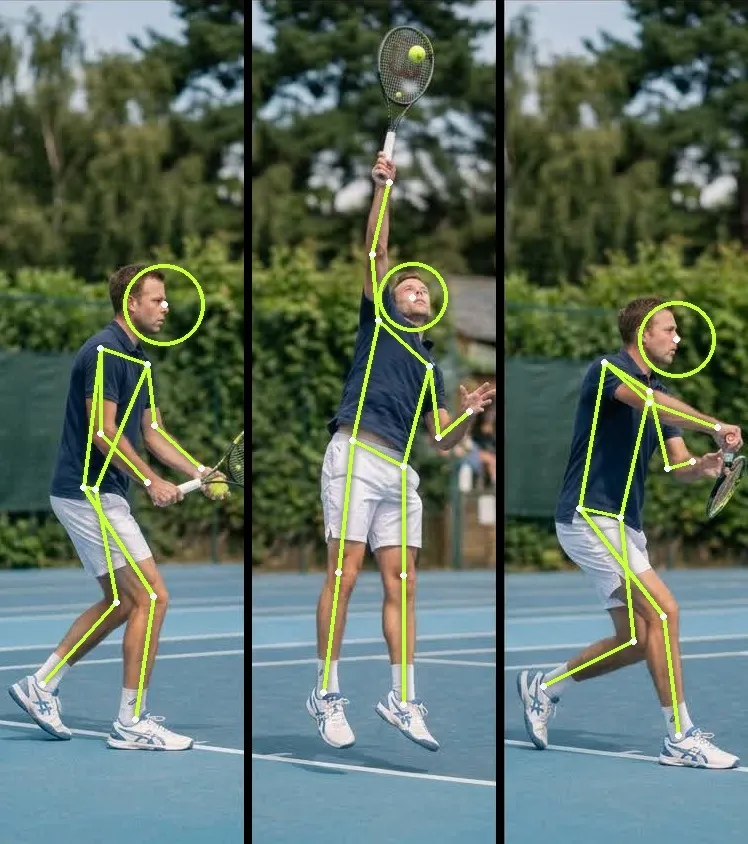
Not yet
Smashes and volleys are found, not graded.
FormCourt recognises them in a clip and lists them so you know it saw them, but they carry a COMING chip instead of a score, because they do not have a rubric yet. Writing one means reading the biomechanics literature and checking every checkpoint against real footage — the same work the three shipped strokes took. It will not be faked in the meantime.
On iPhone
Run your own strokes through it.
iPhone · iOS 17 or later · free to install · three analyses a month free