What a phone can actually measure in your backhand
Backhands are where technique apps quietly give up: most grade one style and let the other take the penalty. Here is FormCourt’s whole backhand rubric, in public: 10 measured checkpoints with the target ranges they are graded against, 6 estimated ones deliberately excluded from your score, and 1 that a camera will never see, marked as such instead of faked.
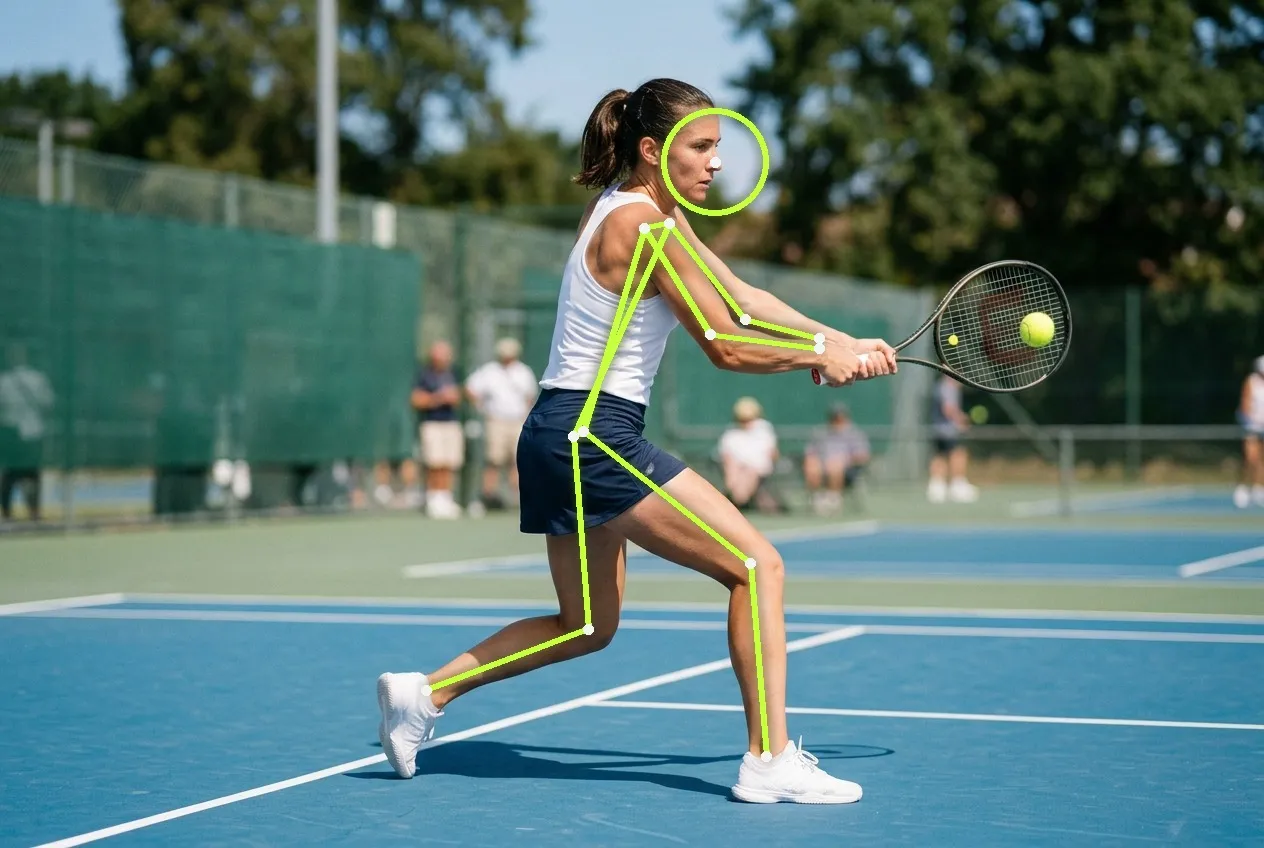
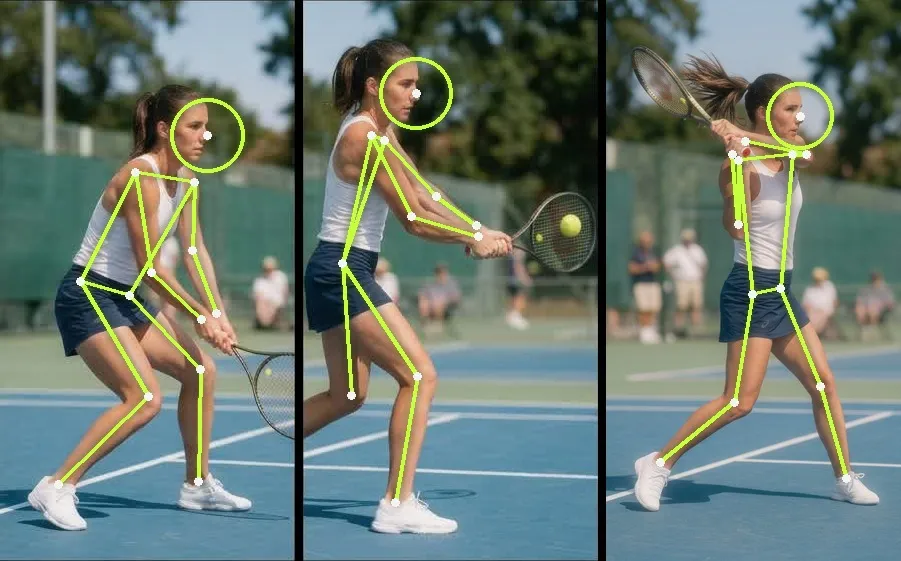
Setup & Turn
SCORED CATEGORYRacquet High Point
The racquet head's highest point above the hitting wrist through the set, from the racquet detector.
TARGET2HB: head 10–60 % of torso above the wrist · 1HB and slice: 40–140 %
Racquet head stays up through the turn, tip pointing up, so the backswing is a smooth C-loop rather than a straight drag.
Shoulder Coil
EST.Shoulder-line foreshortening between the start and turn-complete — estimated at 45°.
Early, full upper-body turn, back partly to the opponent (~100°). More turn than the forehand because the hitting shoulder starts in front.
Off Hand on the Throat
EST.Distance between the wrists at turn-complete.
The non-dominant hand guides the racquet throat back during the turn — sets the grip and keeps the shoulders aligned, on both 1HB and 2HB.
Stance
EST.Front-foot offset along the swing, from the heels or ankles — a label.
Neutral / closed to step into low and mid-court balls; semi-open on wide balls for recovery. A choice, never a fault.
Grip
CHECKLISTHand orientation is invisible to the camera — confirm once in setup.
2HB: bottom hand continental (bevel 2), top hand eastern forehand (bevel 7) — the top hand drives like a non-dominant forehand. 1HB: eastern backhand (bevel 1) or semi-western backhand (bevel 8) to lock the wrist against spin.
Load & Lag
SCORED CATEGORYRear-Leg Load
Smallest knee angle from turn-complete to the racquet drop. A deeper load is never a fault.
TARGET≤ 128° included
Weight loads into the back leg before driving up — the left leg for a right-handed 2HB, the right (front) leg on a 1HB step-in.
Racquet Lag
Racquet head below the hitting wrist at the drop, from the racquet detector.
TARGEThead ≥ 20 % of torso below the wrist
Hips start the uncoil; the racquet head drops below ball height with the strings closed and trails the hands.
Off Arm
1HB: off wrist behind the hips along the swing at contact (graded). 2HB: the off arm is on the racquet, so this is a label.
TARGET1HB: off hand ≥ 60 % of torso behind the hips — further back is never a fault
1HB: the off arm pulls straight back as a counterweight (the scissor). 2HB: the off arm drives the racquet forward into contact.
Hips Before Shoulders
Order of the speed peaks of hip, shoulder, elbow and wrist into contact. Needs 60 fps (recorded clips).
TARGEThip → shoulder → elbow → wrist
Rotation from the ground up: hips, trunk, arm, racquet last.
Contact
SCORED CATEGORYContact Height
Ball (or racquet head, or wrist) height vs the hips at contact.
TARGEThip level to 50 % of torso above
Between hip and chest; a backhand taken low needs the legs, not a dropped racquet head.
Arm at Contact
Dominant-arm elbow angle at contact; band by style.
TARGET1HB 150–180° · 2HB bottom arm ≥ 100°, straight or bent
1HB: hitting arm near straight at contact. 2HB: bottom arm bent, top arm driving — both arms stable through the ball.
Head Still
Nose travel from 100 ms before to 200 ms after contact, scaled to your torso.
TARGET≤ 12 % of torso
Head fixed on the contact zone through impact.
Low-to-High Path
Racquet-head path angle over the last frames into contact.
TARGETtopspin 15–40° · slice −35…−10°
Drive low-to-high through impact for net clearance and topspin.
Contact In Front
EST.Ball / racquet head ahead of the front hip along the swing — estimated at 45°.
Caught early, out in front of the front hip — later than the forehand costs the backhand more.
Finish
SCORED CATEGORYFollow Through
The highest point of the wrap in the 0.4 s after contact. 2HB: racquet head vs the dominant shoulder and across the body. 1HB: hitting wrist above the shoulder with the arm extended.
TARGETat or above the shoulder
2HB: racquet wraps over the dominant shoulder, off elbow pointing at the target. 1HB: hitting arm reaches full upward extension.
Stay Sideways (1HB)
EST.Shoulder-line foreshortening at contact vs the start — which depends on where the camera is, so it is shown as a label and never scored.
On a one-hander the shoulders stay sideways through contact; opening early pulls the ball wide and leaks pace.
Spin
EST.Estimated from the path angle and finish height.
Topspin from a steep path and a high finish; slice from high-to-low with an open face.
Why publish this
An honest gap beats a confident guess.
A table like this is easy to leave out, because “20+ parameters analysed” sells better than a real count with the misses in it. But the moment you feel one number is invented, every other number in the app becomes worthless too. FormCourt would rather tell you the frame was bad.
A one-hander and a two-hander fail differently, so grading them against one ideal is worse than not grading them at all. FormCourt bands the shared checkpoints by style and labels the ones that only apply to one.
FAQ
Backhand analysis questions
Does it work for a one-handed backhand?
Yes, and it grades it as a one-hander rather than penalising it for not being a two-hander. Shared checkpoints are banded by style — arm at contact wants 150–180° on a one-hander but only asks the bottom arm to clear 100° on a two-hander — and style-specific ones are labelled: “Off Arm” is graded on a one-hander and a label on a two-hander, “Stay Sideways” is graded on a one-hander because a two-hander rotates through by design.
How does FormCourt know which backhand I hit?
From the swing itself — whether both wrists stay on the racquet through contact. You never have to tell it, and if it gets a swing wrong you can correct the stroke type, which keeps the model’s original answer as training signal.
What does it measure in a backhand?
Eleven checkpoints across four scored categories: the turn (racquet high point), the load (rear-leg load, racquet lag, off arm, kinetic-chain order), contact (height, arm angle, head stillness, path angle) and the finish (follow through, staying sideways). Five more — shoulder coil, off hand on the throat, stance, contact in front, spin — are estimated and excluded from the score.
Does it handle a slice?
The low-to-high path checkpoint bands topspin and slice separately — roughly 15–40° for topspin and −35 to −10° for slice — so a good slice is not graded as a failed topspin drive.
Why is the backhand the stroke most apps get wrong?
Because two legitimate techniques share a name. Grading them against one ideal means one style always scores badly for reasons that are not faults. That is a modelling choice, not a camera limitation, and it is the reason the backhand rubric is the one with the most style-conditional bands in it.
On iPhone
Measure it, then fix it.
Your lowest checkpoints become next week’s drills. That is the whole product.
iPhone · iOS 17 or later · free to install · three analyses a month free